



- 1. Introduction
- 2. Why curly hair behaves differently
- 3. The science behind curls and moisture
- 4. Understanding your curl type and porosity
- 4. Understanding Your Curl Type and Porosity
- Curl Type: The Shape of Your Curls
- Waves (Type 2)
- Curls (Type 3)
- Coils (Type 4)
- Porosity: How Your Hair Absorbs and Retains Moisture
- Low Porosity Hair
- Medium Porosity Hair
- High Porosity Hair
- Why Porosity Matters More Than Curl Type
- 5. Why beginners need a structured curl routine
- 6. The foundation of a healthy curly routine
- 7. Step 1: Cleanse (deep explanation)
- Medium Porosity Hair
- High Porosity Hair
- High Porosity Hair
- Why Porosity Matters More Than Curl Type
- Pretty Curly Girl cleansers in depth
- How to cleanse correctly
- 8. Step 2: Condition (deep explanation)
- What conditioning actually does inside the hair
- How long should conditioner stay in the hair
- 9. Step 3: Style (deep explanation)
- Pretty Curly Girl stylers explained
- Why layering matters
- 10. The role of protein and elasticity
- 11. How curls form and why technique matters
- 12. Building routines for waves, curls and coils
- Routine for waves
- Routine for curls
- Routine for coils
- 13. Common mistakes and why they sabotage curls
- Using too much conditioner
- Not cleansing frequently enough
- Applying conditioner on the scalp
- Using heavy oils
- Touching curls while drying
- Using too little styling product
- 14. How to refresh curls after wash day
- The simplest refresh routine
- 15. The impact of tools on curl definition
- Clump Brush
- Wide Tooth Comb
- Microfibre Towel
- Diffuser
- 16. Example beginner routines with explanations
- Beginner routine for waves
- Beginner routine for curls
- Beginner routine for coils
- 17. Frequently asked questions
- How often should beginners wash curly hair
- Do all curls need gel
- Does brushing ruin curls
- How long before I see improvement
- 18. Conclusion
1. Introduction
Learning to care for curly hair is a journey that begins with understanding, structure and patience. Many people with waves, curls or coils grew up without guidance and were taught to brush their curls dry, use harsh shampoos or straighten their hair to make it “manageable”.
But curls are not difficult. They are simply different.
Learning to care for curly hair is a journey that begins with understanding, structure and patience
This guide provides an in depth explanation of how to start a curly hair routine as a beginner. It combines hair science, practical steps and years of expertise from the Pretty Curly Girl philosophy: simple routines, clean formulas, CG approved ingredients and a balanced approach to moisture and strength.
By the end of this guide you will understand why curls behave the way they do, which products work for your hair, how to structure wash day and how to maintain definition for multiple days.
A Deep and Comprehensive Guide to Understanding, Caring for and Transforming Your Natural Curls
2. Why curly hair behaves differently
Curly hair is structurally unique. Each bend or twist in the strand creates areas where the cuticle is slightly raised. This leads to:
- quicker moisture loss
- increased dryness
- uneven sebum distribution
- higher sensitivity to weather changes
- greater vulnerability to friction
Straight hair has a smoother surface and a more efficient oil distribution, making it naturally more protected. Curls, on the other hand, need external moisture, conditioning and styling support.
Another key difference is how curly hair interacts with water. When curls are wet, hydrogen bonds within the hair temporarily break, allowing curls to reshape. Once the hair dries and hydrogen bonds reform, the curl pattern becomes fixed in whatever shape it was set during styling.
This is why technique plays such an important role.
3. The science behind curls and moisture
Curly hair has a natural tendency to dehydrate because the lifted cuticles allow moisture to escape easily. Moisture is essential for:
- elasticity
- flexibility
- strength
- curl formation
When curls lack moisture they become brittle, stiff and frizzy. When they have too much moisture and not enough protein, they become overly soft, stretchy and unable to hold shape.
A balanced routine is therefore essential.
4. Understanding Your Curl Type and Porosity
A Deeper Look at How Your Hair Behaves
Before you start any curly hair routine, it is essential to understand two things: your curl type and your porosity. These two factors influence how your hair responds to moisture, products and techniques. When beginners understand both, it becomes much easier to choose the right routine.
Curl Type: The Shape of Your Curls
Your curl type describes the shape your hair naturally forms when it dries. It is not about how “curly” your hair looks, but about the pattern that appears when your hair is hydrated and left undisturbed.
Waves (Type 2)
Waves form gentle, loose S shaped curves. They often look soft and shiny but can easily become straightened or weighed down when too much product is used. Waves need light hydration and lightweight stylers to maintain movement without losing their shape.
Typical characteristics of waves:
- prone to frizz at the top layers
- easily flattened by heavy products
- need minimal product but consistent technique
Curls (Type 3)
Curls form spirals that range from loose ringlets to tighter corkscrews. This curl type needs hydration, curl structure, and frizz control. When properly styled, curls become defined, bouncy and long lasting.
Typical characteristics of curls:
- medium to high volume
- require layered styling (serum plus gel)
- react strongly to humidity and dryness
Coils (Type 4)
Coils form tight spirals or zigzag patterns. They are the most delicate curl type because their bends are sharper, which means the hair is naturally more dry and breakage prone. Coils require deep nourishment, strength, and intentional styling.
Typical characteristics of coils:
- naturally dry and fragile
- shrink significantly when hydrated (healthy sign)
- thrive with deep conditioners and strong hold stylers
Important note: Curl type helps guide your routine, but it does not tell the whole story. Two people with the same curl type can have completely different results depending on the porosity of their hair.
Porosity: How Your Hair Absorbs and Retains Moisture
Curl type tells you how your hair bends. Porosity tells you how your hair drinks.
Porosity refers to the condition of the cuticle, the outer layer of the hair strand. The cuticle opens and closes like shingles on a roof. This affects how well your hair can absorb water and how long it keeps that moisture inside.
Curl type tells you how your hair bends. Porosity tells you how your hair drinks.
Low Porosity Hair
Low porosity hair has tightly closed cuticles. Moisture has a harder time entering the strand, but once it is inside, it stays there for a long time.
Characteristics:
- beads of water sit on top of the hair before absorbing
- products can feel like they “sit” on the hair
- easily overloaded by heavy conditioners
- prefers lightweight formulas and gentle heat to help absorption
Low porosity curls need more patience during conditioning and benefit from warm water or steam.
Medium Porosity Hair
Medium porosity is the easiest to care for. The cuticle opens and closes at a balanced rate, allowing the hair to absorb moisture easily and hold it effectively.
Characteristics:
- responds well to most routines
- retains hydration without buildup
- compatible with a variety of products
This is the porosity most people naturally have before chemical or heat damage.
High Porosity Hair
High porosity hair has raised or damaged cuticles. While it absorbs moisture very quickly, it also loses it just as fast.
Common causes include:
- heat styling
- bleaching and colouring
- chemical treatments
- environmental exposure (sun, wind, saltwater)
Characteristics:
- dries very quickly
- often frizzy, especially at the ends
- requires richer conditioners
- needs protein for strength and structure
High porosity curls benefit from sealing techniques and consistent deep conditioning.
Why Porosity Matters More Than Curl Type
Many beginners focus only on curl type, but porosity explains how your hair behaves, not just how it looks.
Porosity determines:
- how much product your hair needs
- how quickly your curls dry
- how long definition lasts
- whether you need lightweight or richer conditioners
- how often you should use protein
Two people with the same curl type can use completely different routines because of porosity differences.
This is why the best approach for beginners is to observe how the hair behaves:
- Does it absorb products quickly or slowly?
- Does it dry fast or stay wet for a long time?
- Does it feel strong or stretchy?
- Does it get frizzy fast?
Your answers will help you choose the right products and build a routine that truly works for your curls.
5. Why beginners need a structured curl routine
Curly hair thrives on consistency. A structured routine provides:
- predictable results
- less frizz
- better moisture balance
- improved curl formation
- longer lasting definition
- reduced breakage
Without structure, curls behave differently every wash day. With structure, curls begin to follow a pattern and become easier to manage.
6. The foundation of a healthy curly routine
A curly hair routine always follows the same three step structure:
- Cleanse
- Condition
- Style
These steps create a complete cycle: cleansing supports the scalp, conditioning supports the hair, styling supports the curl pattern.
Skipping any step will reduce the final result.
7. Step 1: Cleanse (deep explanation)
A healthy scalp is the foundation of healthy curls. Cleansing removes:
- product buildup
- sweat
- sebum
- pollution
- mineral deposits
Characteristics:
- beads of water sit on top of the hair before absorbing
- products can feel like they “sit” on the hair
- easily overloaded by heavy conditioners
- prefers lightweight formulas and gentle heat to help absorption
Pretty Curly Girl cleansers in depth
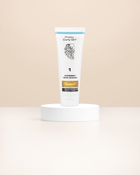
Reset Shampoo: Clarifies the hair and scalp by removing buildup that blocks moisture. Essential for curls using heavy stylers or living in humid climates.
Peppermint Clean Shampoo: A gentle cleansing shampoo that refreshes without stripping. Ideal for regular wash days.
Peppermint Co Wash: hydrating cleansing conditioner suitable for mild cleansing between shampoo days.
How to cleanse correctly
Many beginners use too much shampoo or scrub the lengths. Shampoo needs to stay on the scalp. The lengths will be cleansed by the water and foam travelling downward.
A properly cleansed scalp improves curl root lift and volume.
8. Step 2: Condition
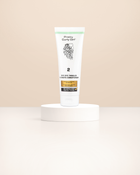
Conditioning restores softness, elasticity and moisture. It also creates slip, making detangling easier and preventing unnecessary breakage.
What conditioning actually does inside the hair
- smooths the cuticle
- increases shine
- reduces friction
- improves elasticity
- helps curls clump together
Pretty Curly Girl’s Intense Moisture Mask delivers deep hydration for curls that need nourishment.
How long should conditioner stay in the hair
Leaving conditioner in for several minutes allows the ingredients to penetrate, especially in medium and high porosity hair.
9. Step 3: Style
Styling forms the final shape of the curl. Styling products:
- lock in moisture
- support elasticity
- reduce frizz
- create definition
- protect curls as they dry
Pretty Curly Girl stylers explained
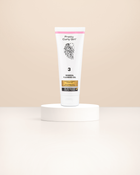
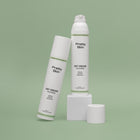
Hyaluronic Protein Serum Strengthens curls, improves bounce and supports elasticity.
Our gels like the Magical Flaxseed Gel Defines curls naturally and leaves them soft with long lasting hold.
Why layering matters
The serum supports the inner structure of the curl, while the gel creates an external layer that protects curls from frizz and humidity.
Styling should be done on wet hair for best results.
10. The role of protein and elasticity
Elasticity is the ability of hair to stretch and return to its original shape. When curls lack elasticity, they lose definition.
Protein temporarily fills weak areas in the hair, improving:
- bounce
- strength
- shape retention
Beginners often do not recognise when curls need protein. Typical signs include:
- curls that stretch too far
- curls that fall flat
- frizz after styling
- difficulty forming curl clumps
The Hyaluronic Protein Serum balances strength and moisture gently, making it ideal for delicate curls. Or use our Protein Mask.
11. How curls form and why technique matters
When hair is wet, curls are moldable. When hair dries, the pattern becomes fixed.
This is why:
- brushing wet hair is useful
- brushing dry hair destroys curls
- scrunching defines the curl shape
- touching curls while they dry causes frizz
- diffusing helps maintain structure
Technique determines whether a curl forms consistently or becomes frizzy.
12. Building routines for waves, curls and coils
Routine for waves
Waves need lightweight care.
Focus on:
- mild cleansing
- light conditioning
- minimal stylers (a foam or strong hold gel)
- gentle scrunch
Too much product can collapse the pattern.
Routine for curls
Curls thrive on hydration and structured layering.
Focus on:
- hydration
- protein balance
- leave-in plus gel
- diffusing for best shape
Routine for coils
Coils need deep nourishment and structured styling.
Focus on:
- moisture retention
- protein support
- slow, gentle diffusing
- moisture and strong hold gels
Coils shrink naturally. This is a sign of hydration, not damage.
13. Common mistakes and why they sabotage curls
Using too much conditioner
This causes buildup which prevents curl formation.
Not cleansing frequently enough
Buildup restricts moisture absorption and reduces definition.
Applying conditioner on the scalp
Leads to flat roots and clogged follicles.
Using heavy oils
They block moisture instead of sealing it in.
Touching curls while drying
Breaks curl clumps and causes frizz.
Using too little styling product
Results in weak or undefined curls.
Mistakes often come from misunderstanding rather than incorrect products.
Mistakes often come from misunderstanding rather than incorrect products.
14. How to refresh curls after wash day
Refreshing restores shape and definition without washing.
The simplest refresh routine
- Mist hair with water
- Add a small amount of leave in on frizzy areas
- Apply foam for lightweight definition
- Scrunch to re activate curl pattern
- Diffuse lightly
This routine works for waves, curls and coils.
15. The impact of tools on curl definition
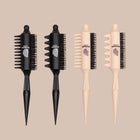
Clump Brush
Creates consistent curl clumps and helps distribute product evenly.
Wide Tooth Comb
Detangles gently without disrupting curl structure.
Microfiber Towel
Reduces friction and frizz by absorbing water without roughness.
Diffuser
Shapes curls with airflow control, leading to more volume and definition.
Tools influence the final result just as much as products.
16. Example beginner routines with explanations
Beginner routine for waves
- Cleanse with Peppermint Clean Shampoo
- Light conditioning
- Strong Hold gel or Foam
- Diffuse
Why this works: Waves collapse easily, so minimal product gives movement and definition without heaviness.
Beginner routine for curls
- Cleanse
- Deep condition
- Serum for elasticity
- Gel for definition
- Diffuse
Why this works: Layering improves shape, hydration and longevity.
Beginner routine for coils
- Reset Shampoo
- Deep conditioning
- Serum for strength
- Gel for hold
- Slow and gentle diffusing
Why this works: Coils need moisture and structure to maintain their pattern.
17. Frequently asked questions
How often should beginners wash curly hair
Every three to seven days depending on scalp needs.
Do all curls need gel
Gel protects the curl pattern. Most beginners benefit from using gel.
Does brushing ruin curls
Brushing dry curls disrupts the pattern. Brushing wet and conditioned hair is encouraged.
How long before I see improvement
Most beginners notice significant changes within two to three wash days.
18. Conclusion
A curly routine is not complicated. With the right steps, clean products and consistent technique, every beginner can transform their curls.
Pretty Curly Girl makes this journey easier with simple routines and CG approved formulas designed to hydrate, strengthen and define curls of every type.
Your journey to healthy, defined and frizz free curls begins with understanding your hair and giving it what it truly needs.
- curly hair routine for beginners
- step by step curly routine
- science of moisture and elasticity
- how to choose curly products
- routines for waves curls and coils
- techniques for curl formation
- how to refresh curls
- common beginner mistakes


