








- Table of contents
- 1. What does growing curls mean
- 2. Why so many women think their hair is unmanageable
- 3. How natural curls get suppressed
- 4. How to know if you can grow curls
- 5. The science behind curly hair
- 6. Growing curls starts with washing differently
- 7. The importance of hydration for curls
- 8. Styling in a way that activates curls
- 9. Patience and the transition phase
- 10. Common mistakes when growing curls
- 11. Fine hair and growing curls
- 12. Wavy hair versus curly hair
- 13. Growing curls and self acceptance
- 14. Frequently asked questions about growing curls
- Conclusion
But what if the problem is not your hair, but the way it has been treated?
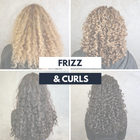
Many women spend years believing their hair is difficult, frizzy or impossible to manage. They try everything to control it. Straighteners, brushes, heavy products and strong shampoos. Yet the hair keeps doing its own thing. But what if the problem is not your hair, but the way it has been treated?
Growing curls is not a trend and not a trick. It is the process of discovering that your hair naturally has waves or curls and that these curls have been suppressed for years. In this blog, we guide you step by step through what growing curls really means, how it works and why so many women discover their natural texture later in life.
This guide is created to give insight, remove misconceptions and help you work with your hair instead of fighting against it.
1. What does growing curls mean
Growing curls does not mean creating curls that are not genetically there. It means allowing the natural texture of your hair to become visible again. Many people naturally have waves or curls, but due to incorrect hair care this texture never gets the chance to show.
Hair does not change texture without a reason. If your hair frizzes easily, has volume without shape or already shows waves when wet, there is a strong chance that your hair has natural curl potential.
Growing curls is essentially a recovery process. You stop doing everything that suppresses the curl and start caring for your hair in a way that supports it.
2. Why so many women think their hair is unmanageable
One of the biggest misconceptions in hair care is the idea of unmanageable hair. In reality, unmanageable hair rarely exists. What happens far more often is that curly hair is treated as if it were straight.
Many women were never taught how to care for textured hair. They follow routines designed for straight hair because that was considered the standard for years. The result is hair that frizzes, lacks shine and has no clear shape.
That hair is then labeled as difficult. While in fact it is hair that simply needs a different approach.
Once women switch to a curl friendly routine, something fundamental changes. The hair becomes calmer, more defined and softer. Not because the hair has changed, but because it finally receives what it needs.
3. How natural curls get suppressed
Curls do not disappear on their own. They are slowly suppressed by daily habits.
Common causes include:
- Cleansing with harsh shampoos that dry out the hair
- Products that coat and suffocate the hair
- Brushing the hair daily while dry
- Frequent use of heat
- Forcing the hair into a straight shape
These habits disrupt the moisture balance and make the hair stiff and dry. Curls need flexibility in order to form properly.
When these habits are removed, the hair gets the space it needs to return to its natural shape.
4. How to know if you can grow curls
Many people doubt whether growing curls is worth trying for them. There are clear signs that indicate curl potential.
You may recognize this:
- Your hair frizzes easily
- Wet hair already shows waves or bends
- Your hair feels dry despite using products
- Your hair dries unevenly
- You had curls or waves as a child
If so, there is a strong chance your hair is not straight, but textured.
5. The science behind curly hair
Curly hair has a different structure than straight hair. The hair follicle is shaped differently and the cuticles do not lie flat. This makes it harder for moisture to stay inside the hair.
That is why curls dry out more easily and are more sensitive to damage. Treating this hair as straight hair only makes the problem worse.
Curls need:
- Gentle cleansing
- Consistent hydration
- Products that support flexibility
Once these basics are in place, curls can recover.
6. Growing curls starts with washing differently
Washing is one of the most important steps when growing curls. Many shampoos cleanse too aggressively and strip the hair of its natural oils.
A curl friendly routine starts with gentle cleansing. Occasional deep cleansing can help remove buildup, but it should be done carefully.
The goal is a clean scalp without drying out the hair.
Hydration is essential when growing curls. Without enough moisture, curls cannot form. The hair becomes stiff and frizzy.
7. The importance of hydration for curls
Hydration is essential when growing curls. Without enough moisture, curls cannot form. The hair becomes stiff and frizzy.
A good conditioner or hair mask makes the hair more elastic. That elasticity allows the hair to curl instead of breaking or puffing up.
Hydration is not a one time step. It is an ongoing process that should be part of every wash routine.
8. Styling in a way that activates curls
Curls form when the hair is wet. That is why styling on wet hair is crucial. By applying products on wet hair and gently scrunching, the curl pattern is activated.
What matters just as much is what you do next. You leave the hair alone. No brushing, no touching, no heat.
The less disturbance while drying, the better the curls will form.
9. Patience and the transition phase
Growing curls takes time. Hair that has been treated incorrectly for years does not recover in a few days. The first weeks can be frustrating.
Many people experience:
- More frizz
- Unpredictable results
- Uneven curl patterns
This is normal. The hair is relearning how to curl. With consistency, the results become more stable and defined.
10. Common mistakes when growing curls
Many people make the same mistakes during this process:
- Switching products too often
- Using too many products at once
- Continuing to brush the hair when dry
- Expecting instant perfection
Growing curls requires calm, patience and trust. Observe your hair and adjust gradually.
11. Fine hair and growing curls
Fine hair can also be curly. The difference is that fine hair gets weighed down more easily. That is why lightweight products and minimal layering are important.
With the right balance, fine hair can develop beautiful curls.
12. Wavy hair versus curly hair
Not everyone will develop tight curls. Some people have natural waves. This is also part of growing curls.
Wavy hair has different needs than tight curls, but benefits just as much from a curl friendly routine.
13. Growing curls and self acceptance
For many women, growing curls is about more than hair care. It is a process of letting go. Letting go of the idea that hair should look a certain way.
When you accept what is naturally there, everything becomes easier. Your hair stops being a struggle and becomes part of who you are.
14. Frequently asked questions about growing curls
- What is growing curls?
Growing curls is the process of restoring and activating the natural curl or wave pattern already present in your hair. Can everyone grow curls? Not everyone has curls, but many people with frizzy hair do have curl potential.
- How long does growing curls take?
This depends on hair damage and consistency. It can take weeks to months.
- Why does my hair look worse at first?
This is the transition phase where hair recovers from incorrect care.
- Do I need special products?
Curl Girl Method Approved products make the process easier and more effective.
Conclusion
Growing curls is not a hype. It is a rediscovery of what has always been there. Many women do not have unmanageable hair. They have curly hair that never received the right care.
By washing differently, hydrating properly and styling consciously, your hair gets the chance to do what it naturally does best. The result is healthier hair, less frizz and curls that truly belong to you.
Growing curls starts with knowledge, patience and trust.
Be pretty. Be curly. Be you.


